Introduction
NFTs have proven to be more than just a special kind of digital collectibles. However, people are able to provide cash for their NFT holdings without the need for traditional banks.
What are NFTs?
NFTs are digital assets that are undividable and also interchangeable. They are called non-fungible tokens in full. This non-fungible token proves one possesses a certain art, video, song, or other digital property authenticated through the help of the blockchain process.
This new concept of NFT Loans has contributed to the transformation of digital assets. However, NFT-backed loans refer to funds where one cannot lose his or her asset like a digital art, unlike other types of secure lending processes.
How do NFT loans work?
Asset Evaluation: The ability to determine the worth and value helps in obtaining an NFT loan. On account of these metrics regarding rarity and the popularity of the artist, that work is considered priceless.
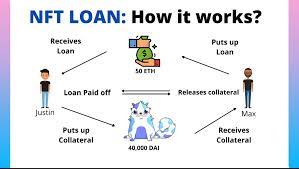
Collateralization: After establishing the worth of the asset you can then offer it as a surety (meaning one can be able to borrow money using this as collateral)This gives assurance that the NFT in store is safely locked under the protocol of smart contract and can only be released once the loan payment is made and all cleared.
Loan Issuance: After they are locked by the borrower, loans tend to take stablecoins as their main currency, like USDT or DAI
Loan Repayment: After releasing the requested loan to the borrower, the lender tends to set some conditions that are to be agreed upon by the interested party. The borrower is supposed to pay back the principal sum along with the obligatory interest within the set period. After all that is complete, the owner will get back his or her NFT as a property after payment.
Potential Tax Advantages
In addition, these NFT Loans tend to be advantageous for borrowing assets and later selling them. Let’s dive into more potential benefits that accompany this concept:
Tax Deferral
Taxation jurisdiction is always taking account of capital gains anytime an individual decides to sell any kind of capital asset. However, if holders use their NFTs as collateral for a loan, the realization of the actual capital gains can be delayed. This delaying of one’s costs could serve one well, as individuals are able to obtain money even before paying taxes after selling some property.
Tax Treatment Differences
When it comes to borrowing against an asset or directly selling it, there are variations in the tax treatment. Selling the asset can potentially lead to tax obligations, whereas borrowing against it usually doesn’t involve responsibilities. This can introduce concepts in tax administration.
Tailored Tax Strategies
It’s important to highlight that taxpayers should seek advice from a tax expert who understands their circumstances and the tax laws of their jurisdiction. By doing they can fully grasp the impact of using NFT loans on their finances. These tax advisors can create plans aligned with individuals’ financial goals within the framework.
Consideration of Tax Laws
Tax laws concerning assets like NFTs are subject to change as they relate to operations. As a result, the advantages and disadvantages of using NFTs as collateral for loans may vary across jurisdictions and over time. Therefore, it’s crucial to stay updated on the evolving tax regulations related to NFTs.
The Future of NFT Loans
Given advancements in technology and decentralized finance, it is highly likely that we will see growth in NFT loans. Over time, it is anticipated that this model will become more secure and user-friendly, encouraging increased participation from individuals.
Risks and Considerations
Market Risk
The crypto market is always recognized for its high-volatile nature. The prices of these digital assets are mostly known to be unstable and most likely unpredictable in the short run. Market risk is likely to be experienced because when a loan is taken using NFT as collateral, the borrower is not assured of getting its equivalent value in the market due to the fact that the market is always unpredictable hence making the right decision is always a problem. Any detected drop in the value of NFT collateral can highly trigger a margin call.
Margin Calls
Margin call always takes place once the value of the collateral in NFT crosses a defined limit of the loan agreement. If this is experienced during the action, then the borrower is entitled to offer additional collateral or pay part of the given loan to equalize the collateral ratio between both parties. If one is unable to pay back, then the chances of losing the collateral in the form of an NFT on margin is unstoppable.
Risk of Asset Loss
Default on margin requirements or loan repayment leads to liquidation of the NFT collateral. Such an outcome may be very traumatizing, in particular for the collectors and the creators, with a high sentiment for their electronic items.
Smart Contract Risks
Vulnerabilities: Smart contracts are used for the process of taking out loans based on non-fungible tokens (NFT). The smart contracts are self-enforcing contractual arrangements with coding of clauses of the loan nevertheless, just as with any piece of software, smart contracts may contain vulnerabilities and/or errors in the code itself.
Exploitation of these vulnerabilities by criminals may lead to serious economic consequences for the creditor, as well as the debtor.
Contract Immutability: It is usually impossible for smart contracts to be modified after they have been embedded in a blockchain. Therefore, if an error in coding and vulnerability is detected after implementation, it will be difficult to correct it. Such inflexibility may prove dangerous should a shortcoming be noted but not rectified forthwith.
Auditing and Security: Hence, only high-quality and audited smart contracts should be used in an attempt to minimize these associated risks. Third-party security assessments are normally conducted among many lending platforms ahead of the deployment of smart contracts. Therefore, users should choose platforms that are highly secure and transparent.
Legal and Regulatory Concerns
Landscape: These are relatively new technologies, with regulatory regimes for NFTs and DeFi in development. Unclear rules concerning a mortgage on NFTs make the market participants uncertain.
Jurisdictional Differences: Regulatory environments within single jurisdictions vary greatly. What is legal and compliant in one state might not be regulated at all, let alone be prohibited by law in another state. Therefore, one should be aware of the legal implications of NFT loans in your jurisdiction to avoid eventual lawsuits.
Compliance and Reporting: In fact, some NFTs must adhere to the AML/KYC regulations as well. Failure to follow these requirements is coupled with the law and quite severe punishment.
Legal Disputes: Although settling disputes about NFT lending requires transparent legal rules. Such a situation would result in conflict that may entail lawsuits arising from the interpretation of contracts, terms, and acts.
To mitigate these risks, it’s advisable to:
Diversify Collateral: While using multiple NFTs instead of a single NFT, one can avoid risk because it can be spread in a portfolio.
Use Reputable Platforms: Select trustworthy, open, and secure lenders.
Consult Legal Experts: Consult relevant authorities regarding the regulations around blockchain, smart contracts, and other digital assets within your jurisdiction.
Stay Informed: You must remain informed of regulatory changes, as they may alter the meaning or enforceability of legislative provisions, and be prepared for compliance.
Conclusion
Unlocking NFT’s Value via this new Approach. They help NFT holders achieve a trade-off between liquidity and control. However, just like any other financial tool, one should be warned about the advantages and disadvantages of NFT securitization.