

Introduction
Bitcoin, the pioneering cryptocurrency, has emerged as a significant player in the digital currency landscape. With its decentralized nature and underlying blockchain technology, Bitcoin offers a new paradigm for financial transactions and stores of value.
This article aims to provide a comprehensive guide to mining, buying, and using Bitcoin, empowering individuals with the knowledge to navigate this exciting digital frontier.
Bitcoin’s significance lies in its ability to operate outside the control of central authorities, such as banks or governments. Its decentralized nature ensures transparency, security, and immutability, making it an attractive option for individuals seeking financial autonomy.
By understanding the fundamentals of Bitcoin, users can harness its potential for various purposes, including peer-to-peer transactions, investment, or simply participating in the evolving digital economy.
What is Bitcoin?

Bitcoin is a decentralized digital currency that operates on a peer-to-peer network, allowing for direct transactions between users without the need for intermediaries like banks or governments. It was created in 2009 by an anonymous person or group of people using the pseudonym Satoshi Nakamoto. One of Bitcoin’s key features is its limited supply, with a maximum of 21 million Bitcoins that can ever be mined.
At the heart of Bitcoin’s technology is the blockchain, a public ledger that records all transactions ever made on the network. The blockchain serves as a transparent and immutable record of transactions, ensuring the integrity of the currency.
This distributed ledger is maintained by a network of computers, known as miners, who validate and confirm transactions by solving complex mathematical problems. Bitcoin offers several advantages over traditional currencies.
Firstly, it provides a high level of security due to its cryptographic design. Transactions are encrypted and authenticated, making it extremely difficult for hackers to manipulate or counterfeit the currency.
Secondly, Bitcoin allows for borderless transactions, enabling individuals to send and receive funds across the globe quickly and at a lower cost compared to traditional methods. Additionally, Bitcoin transactions can be conducted anonymously, as users are identified by their unique digital addresses rather than personal information.
Bitcoin has gained recognition as a potential store of value and investment asset due to its finite supply and scarcity. As more people adopt Bitcoin and accept it as a form of payment, its value has seen significant growth and volatility. This has led to the emergence of a vibrant cryptocurrency market, where investors trade Bitcoin and other digital assets.
What is Bitcoin Mining?
Bitcoin mining is the process by which new Bitcoins are created and transactions are verified and added to the blockchain. It plays a crucial role in maintaining the security and integrity of the Bitcoin network. Miners use powerful computers to solve complex mathematical puzzles, which serve as proof of work (PoW). These puzzles require significant computational power and energy consumption to solve.
The mining process starts with miners collecting and verifying transactions into blocks. They then compete to find a solution to the mathematical puzzle associated with each block. The first miner to solve the puzzle broadcasts their solution to the network, and if it is valid, the block is added to the blockchain.
This process is known as mining, and the miner who successfully mines a block is rewarded with a certain number of newly minted Bitcoins, along with any transaction fees associated with the transactions in that block. Mining serves two main purposes in the Bitcoin network.
Firstly, it ensures the security and immutability of the blockchain. The computational work required to solve the puzzles acts as a deterrent against malicious actors attempting to alter past transactions. It makes it highly improbable for an attacker to modify the blockchain without a majority control of the network’s computing power.
Secondly, mining is responsible for the creation of new Bitcoins. As the reward for mining a block, miners receive a predetermined amount of newly minted Bitcoins. This serves as an incentive for miners to dedicate their computational resources to secure the network.
However, the mining reward decreases over time through a process called halving, which occurs approximately every four years. This mechanism helps control the rate of new Bitcoin creation and ensures a finite supply.
Choosing a mining pool to join
Mining pools are collaborative groups of miners who combine their computing power to increase their chances of successfully mining blocks and earning rewards.

Joining a mining pool can be advantageous for individual miners, especially those with limited computational resources, as it allows them to collectively compete with larger mining operations.
One of the primary benefits of joining a mining pool is the increased probability of successfully mining blocks. Since multiple miners contribute their computing power, the pool as a whole has a higher hash rate, which improves the chances of solving the mathematical puzzles required to mine blocks.
When a block is successfully mined, the rewards are distributed among the pool participants based on their contributed computational power.
Steps to join a mining pool and start mining Bitcoin
Joining a mining pool involves a few simple steps. Firstly, miners need to choose a reputable mining pool that aligns with their preferences in terms of fees, payout methods, and pool size. Popular mining pools include Antpool, F2Pool, Slush Pool, and BTC.com.
Once a mining pool is selected, miners need to create an account on the pool’s website and set up their mining software or hardware to connect to the pool’s mining server. This usually involves configuring the mining software with the pool’s URL, username, and password. Alternatively, miners can also join a mining pool using cloud mining services provided by some pools.
After connecting to the mining pool, miners can start contributing their computational power to the pool’s collective mining efforts. The pool’s mining server will distribute work to the miners, who will then execute the mining algorithms on their devices. When the pool successfully mines a block, the rewards are shared among the participants based on their contribution.
Joining a mining pool allows individual miners to overcome the challenges of mining alone, such as the high computational requirements and the unpredictability of block rewards. It provides a more consistent income stream by distributing rewards regularly, even if the individual miner’s chances of mining a block on their own are low.
Choosing a Bitcoin Wallet
To acquire Bitcoin, individuals can follow a straightforward process of buying the digital currency. The first step is to choose a reliable cryptocurrency exchange where Bitcoin is traded. Popular exchanges include Coinbase, Binance, and Kraken.
Once an exchange is selected, users need to register an account, complete the necessary verification procedures, and set up a digital wallet to store their Bitcoin securely. Funding the account can be done through various methods such as bank transfers, credit/debit cards, or even other cryptocurrencies. With the account funded, users can place a buy order for Bitcoin at the desired price and quantity, and once the order is executed, the Bitcoin is credited to their wallet.
Types of wallets
When it comes to storing Bitcoin, there are different types of wallets available, each offering its level of security and convenience. Understanding the different types can help users choose the most suitable wallet for their needs.
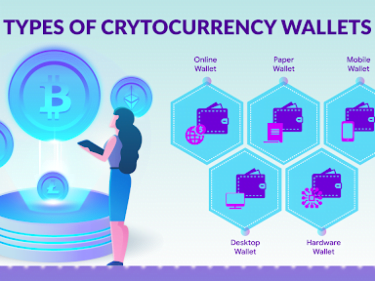
Software Wallets: Software wallets are applications or programs that can be installed on a computer or mobile device. They offer convenient access to Bitcoin and are available in various forms, including desktop wallets, mobile wallets, and online wallets. Software wallets provide a balance of security and ease of use, as they allow users to manage their private keys and perform transactions directly from their devices.
Hardware Wallets: Hardware wallets are physical devices designed specifically for storing Bitcoin and other cryptocurrencies. They provide an extra layer of security by keeping the private keys offline. Hardware wallets are typically USB-like devices that store private keys and require physical interaction to authorize transactions.
This offline storage greatly reduces the risk of hacking or malware attacks, making hardware wallets one of the most secure options available.
Online Wallets: Online wallets, also known as web wallets, are provided by third-party platforms accessible through a web browser. These wallets are convenient as they can be accessed from any device with an internet connection.
However, since the private keys are stored on the platform’s servers, online wallets are considered less secure than software or hardware wallets. It is essential to choose reputable and trusted online wallet providers to minimize the risk of unauthorized access.
It’s important to note that regardless of the type of wallet chosen, users should always practice good security measures such as using strong passwords, enabling two-factor authentication (2FA), and regularly backing up their wallet data.
Factors to consider when selecting a wallet
When selecting a Bitcoin wallet, there are several factors to consider to ensure the security and usability of your digital currency holdings. Here are some key factors to keep in mind:
Security: The security of your Bitcoin is of utmost importance. Look for wallets that offer robust security features such as encryption, two-factor authentication (2FA), and the ability to control and manage your private keys. Hardware wallets, like Ledger and Trezor, are generally considered to be the most secure option as they keep your private keys offline.
User-Friendliness: Consider the ease of use and user interface of the wallet. A user-friendly wallet will make it easier for you to manage your Bitcoin and perform transactions. Look for wallets with intuitive interfaces and clear instructions.
Compatibility: Ensure that the wallet you choose is compatible with your operating system or device. Some wallets are designed specifically for certain platforms like Windows, macOS, iOS, or Android. Check if the wallet you are interested in is compatible with your preferred device.
Reputation and Trustworthiness: Research the wallet provider’s reputation and credibility in the cryptocurrency community. Look for reviews, user feedback, and the company’s track record in terms of security and customer support.
Development and Updates: Consider the wallet’s development team and their commitment to maintaining and updating the wallet. Active development and regular updates indicate that the wallet is actively supported and security vulnerabilities are promptly addressed.
Backup and Recovery Options: Look for wallets that offer backup and recovery options in case of loss or damage to your device. This ensures that you can still access your Bitcoin even if your device is lost, stolen, or damaged.
Conclusion
In conclusion, Bitcoin holds immense potential in revolutionizing the financial landscape. Its decentralized nature, transparency, and security make it an attractive option for individuals seeking financial autonomy and participating in the evolving digital economy. However, it is crucial to approach Bitcoin with responsibility and caution.
Bitcoin’s potential for growth and investment opportunities should be balanced with an understanding of its price volatility and fluctuations. While it has shown significant value appreciation over time, it is important to recognize the speculative nature of the cryptocurrency market. Responsible investment practices, such as diversification and risk management, should be followed to mitigate potential risks.

Mubashir Ahmed is a multifaceted market analyst with extensive knowledge of the blockchain industry. He is proficient in market analysis and blockchain technology, having had experience with numerous projects in the space. He has a deep understanding of the Cryptocurrency industry, its trends, and how to best approach investing in it.